 NCOMA™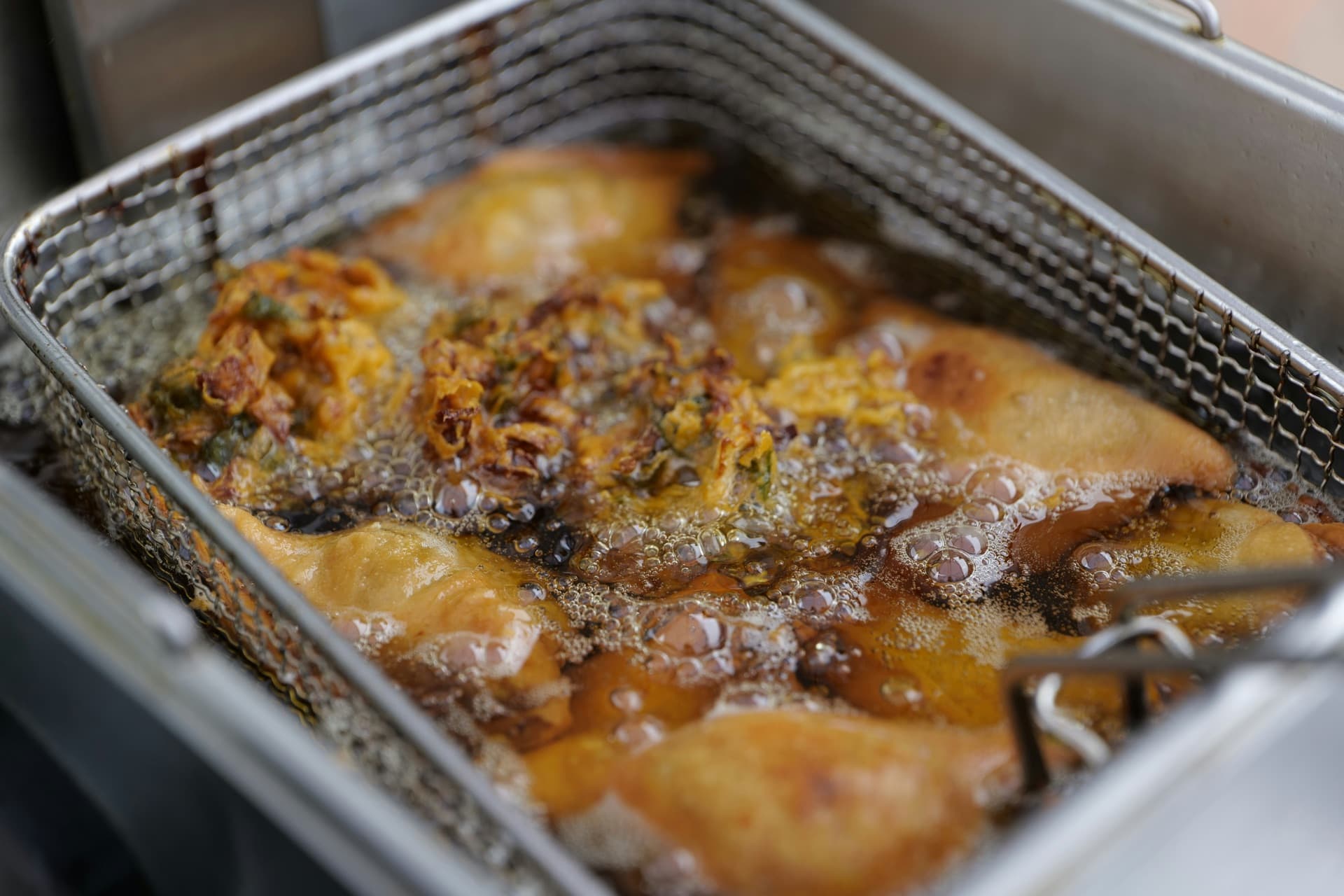
What is in your oil?
Carcinogens. Aldehydes. Trans fats. Free radicals. If your restaurant isn't testing its frying oil, this is what's in it — and what your customers are eating. 78% of American restaurants have never checked.
The Problem
This is what's actually in degraded frying oil.
When frying oil breaks down — through heat, oxygen, water, and time — it doesn't just get “old.” It becomes a cocktail of toxic compounds that transfer directly into the food your customers eat.
20×
Above WHO Limits
PUFA-rich oils at frying temperature produce aldehyde concentrations approximately 20 times higher than WHO recommended limits. These compounds absorb directly into the food.
Grootveld et al. (2021), Frontiers in Nutrition
78%
Have Never Tested
Of 412 US operators surveyed, 78% have never measured the Total Polar Materialsin their frying oil. Not once. They don't know what's in it. Neither do their customers.
NCOMA™ 2026 State of the Fryer Survey
0
Federal Standards
Germany, France, Spain, Belgium, China, India — 20+ countries mandate TPM discard thresholds. The United States has no federal limit, no required testing, no standard of any kind.
FDA / USDA regulatory review; Codex Alimentarius
The Chemistry of Neglect
Every hour your oil degrades, it produces these.
4-Hydroxynonenal (4-HNE)
A lipid peroxidation product from omega-6 PUFA oxidation. Classified as cytotoxic and genotoxic. Linked to oxidative stress, inflammation, and cell damage in peer-reviewed literature. Generated in every fryer running degraded PUFA-rich oil.
Acrolein
The simplest unsaturated aldehyde. A respiratory and gastrointestinal irritant. Produced when glycerol in oil breaks down at frying temperatures. The compound responsible for the acrid smell near an overused fryer.
Trans,trans-2,4-decadienal
The dominant aldehyde from linoleic acid oxidation. What you taste as “rancid” or “fishy” in degraded oil. Absorbed into the food during frying. Diners eat it. Staff breathe it.
Total Polar Materials (TPM)
The umbrella measurement for all degradation products — polymers, dimers, free fatty acids, oxidized triglycerides. Fresh oil: 2–4% TPM. Legal limit in Europe: 24–27% TPM. Many US fryers: nobody has ever checked.
30%+
TPM levels found in unregulated US fryers
No US survey exists. Delhi street vendors: 65%+ exceeded threshold. Athens restaurants: 17%. The US — with no testing — is flying blind.
3 days
Median oil change frequency — regardless of oil type, volume, or filtration
A fixed schedule that gets every operation wrong. Wastes good oil. Serves food in bad oil. Condition-based testing is the only answer.
20–40%
More fat absorbed by food fried in degraded oil
Saguy & Dana (2003), Journal of Food Engineering
The Health Impact
This is what degraded oil does to the people eating it.
When cooking oil reaches high temperatures or is reused without testing, its chemical structure breaks down through oxidation and thermal stress. The result is a toxic cocktail that transfers directly into food — and into the bodies of everyone who eats it.
Cancer Risk
Degraded oils contain mutagenic compounds and carcinogens. Chronic consumption — and even inhalation of frying fumes — is linked to higher rates of lung, colorectal, and breast cancers in peer-reviewed epidemiological studies.
Cardiovascular Disease
Degraded oils alter your lipid profile — raising LDL (“bad”) cholesterol while lowering HDL (“good”) cholesterol. They promote atherosclerosis: the stiffening and narrowing of arteries that leads to heart attacks and strokes.
Neurological Damage
4-Hydroxynonenal (4-HNE) — generated in every fryer running degraded PUFA-rich oil — plays a documented role in the progression of neurodegenerative disorders including Alzheimer's and Parkinson's disease.
Trans Fat Formation
Heat alters the structure of unsaturated fats, creating trans fats — the same compounds the FDA moved to eliminate from the food supply. Every hour of frying in degraded oil produces more.
Oxidative Stress
Free radicals and aldehydes from degraded oil damage cells and DNA. This chronic internal stress is linked to premature aging, inflammation, and the development of degenerative diseases.
Digestive Distress
In the short term, rancid oil causes stomach irritation, nausea, and indigestion. The off-flavors — rancid, sour, fishy — are your body telling you the oil should have been changed days ago.
Sources: Harvard T.H. Chan School of Public Health; Grootveld et al. (2021), Frontiers in Nutrition; Choe & Min (2007), Journal of Food Science.
The Gap
Most American kitchens have no standard for frying oil.
The FDA hasn't signaled interest. No state has enacted TPM legislation. No bill has been introduced. Nobody is coming to regulate this.
NCOMA™ changes that.
“The National Cooking Oil Management Association exists to establish what no federal regulation currently requires: a rigorous, knowledge-based standard for how cooking oil is selected, managed, tested, and replaced in American commercial kitchens.”
NCOMA™ Mission Statement
The Solution
The WIYO! seal. Three tiers. One standard.
WIYO! stands for “What Is Your Oil?” — the question every diner should ask and every kitchen should be able to answer. When you see the WIYO! seal on a restaurant window, it means that kitchen has been independently inspected and certified by NCOMA™. They test their oil daily, filter it, log every reading, and discard it at the science-backed threshold. No guessing.
Seedless Palm Oil
Food service operation utilizing Seedless Palm Oil from Colombia — a fruit oil, pressed from the flesh of the palm fruit, not a seed.
Zeco Filtration
Food service operation practicing proper filtration procedures utilizing Zeco filtration — the patented Positive Seal system.
The Full Standard
Food service operation using: 1. Colombian Seedless Palm Oil, 2. proper filtration using Zeco, and 3. an operation that observes and practices TPM protocol.
0M+
Foodservice outlets with no oil quality standard
National Restaurant Association, 2025
0%
Of operators who have never tested TPM
NCOMA™ 2026 State of the Fryer
0%
TPM — the NCOMA™ discard threshold
Aligned with Codex Alimentarius and EU law
40–80%
Oil life extension from proper management
Moreira et al., Deep-Fat Frying
The Science
This isn't opinion. It's peer-reviewed chemistry.
What your customers are actually eating
Aldehydes from degraded oil don't stay in the fryer. They absorb into the food during cooking. Grootveld's team used NMR spectroscopy to measure it: PUFA-rich oils at 180°C generated aldehyde concentrations orders of magnitude above safety thresholds. Those compounds cause the off-flavors — rancid, sour, fishy — that tell you the oil is done. But most kitchens have already served dozens of batches by that point.
Grootveld et al. (2021), Frontiers in Nutrition; (2015), BBC/De Montfort University


What operators are wasting — or worse
The median oil change is every 3 days, regardless of the oil, the menu, the volume, or whether anyone filtered. That schedule either dumps oil with usable cycles left — costing thousands per year — or keeps serving food in oil past the threshold. One fryer, two ways to lose. Managed operators extend oil life 20–40% and know exactly when to change.
NCOMA™ 2026 State of the Fryer; Moreira et al., Deep-Fat Frying: Fundamentals
Why the oil type matters more than the price
Linoleic acid — the dominant fatty acid in soybean, corn, and conventional sunflower oil — oxidizes 10–40× fasterthan oleic acid. Same fryer, same temperature, different chemistry. Conventional soybean oil (58% PUFA) lasts 72 fry cycles. High oleic sunflower (9% PUFA) lasts 210. The plant doesn't matter. The fatty acid profile does.
Choe & Min (2007), Journal of Food Science; Holman & Elmer (1947), JAOCS

Your kitchen deserves a standard.
NCOMA™ certification proves your oil is tested, filtered, and managed to a science-based threshold. Show your customers you care about what's in the fryer.
The oil is an ingredient.
Manage it like one.
The 2026 State of the Fryer
412 operators. 38 states. The first comprehensive survey of how American restaurants actually manage their frying oil. The findings are worse than expected.
- 78% have never measured TPM
- 25% have no filtration equipment at all
- 96% unaware of the 25% TPM international standard
- 84% cannot name a single oil degradation pathway

Who We Are
Built by the people who know the fryer
Not regulators. Not academics. Operators and engineers who spent decades inside America's commercial kitchens and decided the standard needed to exist.
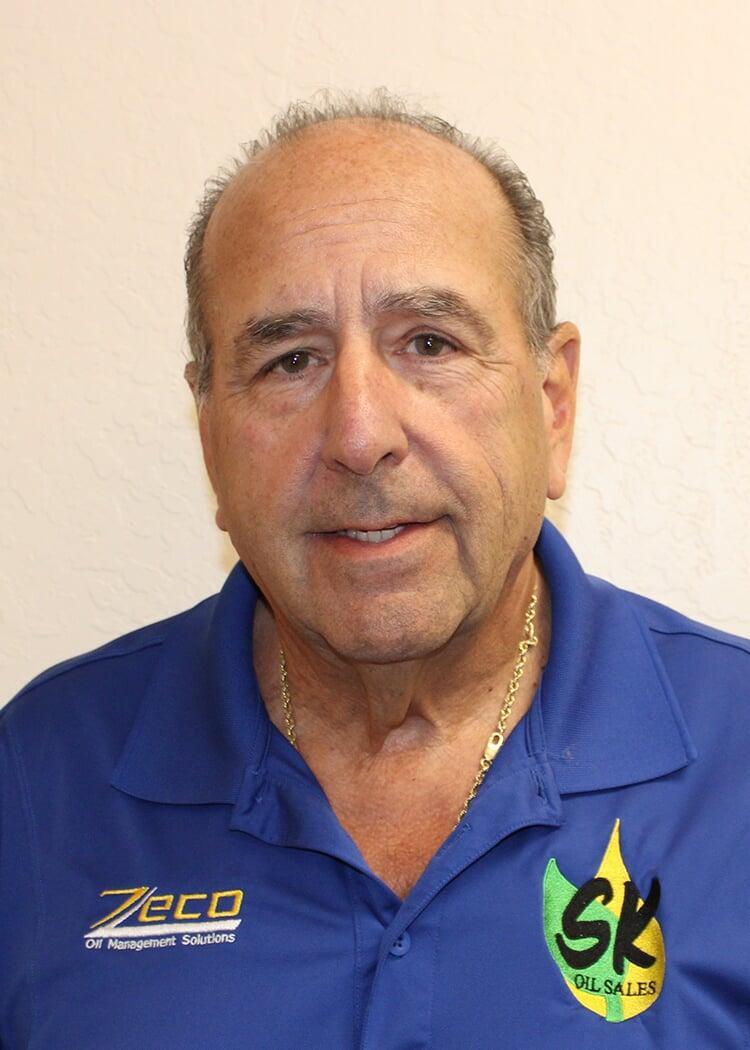
Matt McMahon
President & Co-Founder
Former owner and operator of casual dining restaurants since 1975 — from New York to Los Angeles, Detroit to Tampa, and everything in between. Co-founded NCOMA™ to bring awareness to degraded oils and their effects on human health.

Conrad Canter
Co-Founder & Technical Director
Inventor of the Zeco Oil Filtration Machine — a patented closed-loop system that microfilters cooking oil down to 0.5 microns, serving hundreds of restaurants across the Southwest.

Pablo Herrera
Co-Founder, The Oil Insurgency
Founder of The Oil Insurgency, a cooking oil company dedicated to bringing high-oleic palm oil (HOPO) to the American market — a fruit oil with superior frying performance and stability. Strategic partner to NCOMA™.

WIYO! = “What Is Your Oil?”
Your customers can't see what's in the fryer.
The WIYO! seal can.
Certification gives your kitchen a standard, your staff a credential, and your guests the one thing they've never had: proof.